One of the primary treatments that Dr. Areti uses is Medical Cranial Therapy.
This therapy involves light touch – generally no more than the weight of a nickel. The doctor uses her hands to evaluate the craniosacral system by gently feeling various locations of the body to test for the ease of motion and rhythm of the cerebrospinal fluid pulsing around the brain and spinal cord.
Soft-touch techniques are then used to release restrictions in any tissues influencing the craniosacral system involving the upper and lower body. By normalizing the environment around the brain and spinal cord and enhancing the body’s ability to self-correct, Medical Craniosacral Therapy can alleviate a wide variety of dysfunctions, from chronic pain and sports injuries to stroke and neurological impairment, ADHD, Autism, Concussion, Migraines, and many more.
Cerebrospinal fluid plays a crucial role in the functioning of the craniosacral system. This fluid, which surrounds and cushions the brain and spinal cord, has a rhythmic flow. DOs, and NMDs believe that disruptions in this flow can lead to health problems and that restoring the natural rhythm can promote healing.
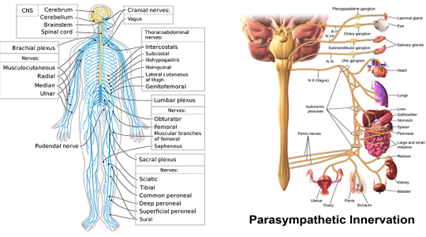
The central nervous system is fundamentally linked to the craniosacral system. By improving the functioning of the craniosacral system, CST can positively impact the central nervous system, potentially improving a wide range of physiological functions and regulation of hormones. The endocrine system is linked to the nervous system by effects of the hypothalamus on the pituitary gland.
Medical Craniosacral Therapy doesn’t just impact the craniosacral system. By improving the body’s ability to self-correct, Medical CST can positively influence other physiological body systems, from the respiratory and circulatory systems to the digestive and musculoskeletal systems.
While Craniosacral Therapy involves touch, it’s not traditional massage therapy. Medical CST focuses on the craniosacral system, using light touch to improve the functioning of the central nervous system. This makes it different from other massage therapies, which often focus on relieving superficial tension in the muscles, without affecting the organs or educating the nervous system to compensate and bounce back from the dis-ease state.
Medical Craniosacral Therapy can complement other therapies. Whether you’re undergoing physical therapy for an injury, psychotherapy for stress, Acupuncture, chiropractic adjustments, cancer chemotherapy, massage therapies for relaxation, adding Medical CST to your regimen can enhance your overall well-being.
Medical Craniosacral Therapy is generally considered safe. It’s a non-invasive therapy that uses a light touch, and it’s suitable for people of all ages from newborns, adults and senior citizens.
It is safe and many Hospitals in Europe, and integrative Oncology hospitals incorporate this modality with other cancer therapies to enhance the positive outcomes of the therapy.
How the skull moves to enhance mental, endocrine, structural health
The skull has very complex patterns of movement. There are at least two different rhythms to which the skull moves. One is the breathing cycle and the other is the cranial pulse as described in Medical cranial osteopathy.
These rhythms act to expand the cranial bones and then return them to their resting state. For instance, when we breathe in, pressure is applied to the front of the sphenoid bone (butterfly shaped bone behind the eyes housing the command center for all the hormones in the body. This pressure subtly rotates this bone forward while indirectly rotating the base of the occipital bone (base of the skull) upward. This movement ‘opens’ the SB junction and allows for proper inhalation and proper balanced, harmonious function of the nervous and hormonal system.
When we breathe out, the pressure is released and the sphenoid and occipital bone return to their resting position. The SB junction ‘closes’ which allows for proper exhalation.
How Craniosacral Motion & Fascia Works
In the mid-1970’s, Dr. John Upledger, was assisting in a surgery to remove a growth from the membrane wrapping the spinal cord. His task was to “steady the cord” so that there would be no movement, which could cause a slip of the surgeon’s blade in this delicate area. Dr. Upledger became aware of a rhythmic wave of fluid motion that would sweep up and down within the membranes. He went on to study this motion in great detail.
Dr. Upledger’s explanation for the wave motion, is one of several theories about the origins of the waves of motion felt in the human body and around the central nervous system. It focuses on a hydraulic motion created by the filling and emptying of the membranes surrounding the brain and spinal cord within the membranes. It also describes the motions of the bones of the skull as a result of the filling and emptying.
The motions of the skull and membranes are spread throughout the entire body via a tissue called “fascia.” Fascia is also known as “connective tissue” and is present throughout the entire body, from the walls of individual cells, to wrappings around groups of cells, to the tendons and ligaments which hold us together, much like the rigging on a sailboat allows the sail to capture the wind and to move. Without the lines on a sailboat, the sail would be useless. This form of structure is known as tensegrity.
At a microscopic level, fascia is exquisitely beautiful. Its fibers are actually tubules, with droplets of fluid traveling through them. These fibers are in constant motion, coming together, moving apart, creating and recreating new designs. It is through this fluid matrix that there is an exchange of information, an exchange of nutrients and waste…all of which lead to the health of the body.
When there is an injury to the body, the healing process can lead to “restriction” within the fascia. An easy to understand model is scar tissue. While fascia has no one pattern of cells, and shapes and forms are constantly dancing, scar tissue is, on the other hand, static, immobile, with all the fibers aligned and “stuck.”
Restriction can happen for many reasons, not just an overt injury. Restriction can occur with disease processes, inflammatory processes, or chronic conditions, or with immobility created by habitual patterns of posture, or habitual positioning created by bracing, such as orthodontia . It can occur as a result of emotional trauma. With restriction in the fascia, the original problem is compounded, exacerbated. Without the normal function of the fascia, and the normal circulation in the tissue, healing is difficult, or sometimes impossible.
What is the correlation among sleep apnea (with or without snoring), TMJ (tight jaw), cavities, shallow breathing, headaches, tight neck, bad posture, sunken eyes, hormonal imbalances, compromised head drainage/lymphatic system malfunction (Glymphatic), and cognitive function?
- Tight jaw/TMJ is related to incorrect breathing patterns which, in turn, affect cranial bones movement. As such, this is also responsible for cavities, sore throat/neck, jaw pain, lymphatic and cerebrospinal (CSF) fluid flow.
- The way we breathe, especially in sleep apnea/snoring and mouth breathing, this certainly influences our posture, lymphatic and cerebrospinal fluid flow CSF, cognitive function, visual function, adenoids and dental health. For some, mouth breathing can be the root cause of digestive issues as well as debilitating head and neck pain. If our airways are restricted, whether it’s because of enlarged adenoids due to allergies, retruded /small jaws due to a low tongue posture (because of a tongue tie), or a combination of these things, our head will tend to move forward in order to open up the back of our throat and allow more room for airflow. It is also critical to mention that endotoxins and exotoxins are responsible for neck and muscle pain besides the wrong breathing pattern.
- With cranial osteopathy, we work to systematically release and balance all bones; unlike other techniques which ignore the whole cranial vault structure and focus solely on the tongue/TMJ. All the cranial bones are a continuum, or a vessel of high hydraulic Pressure system.